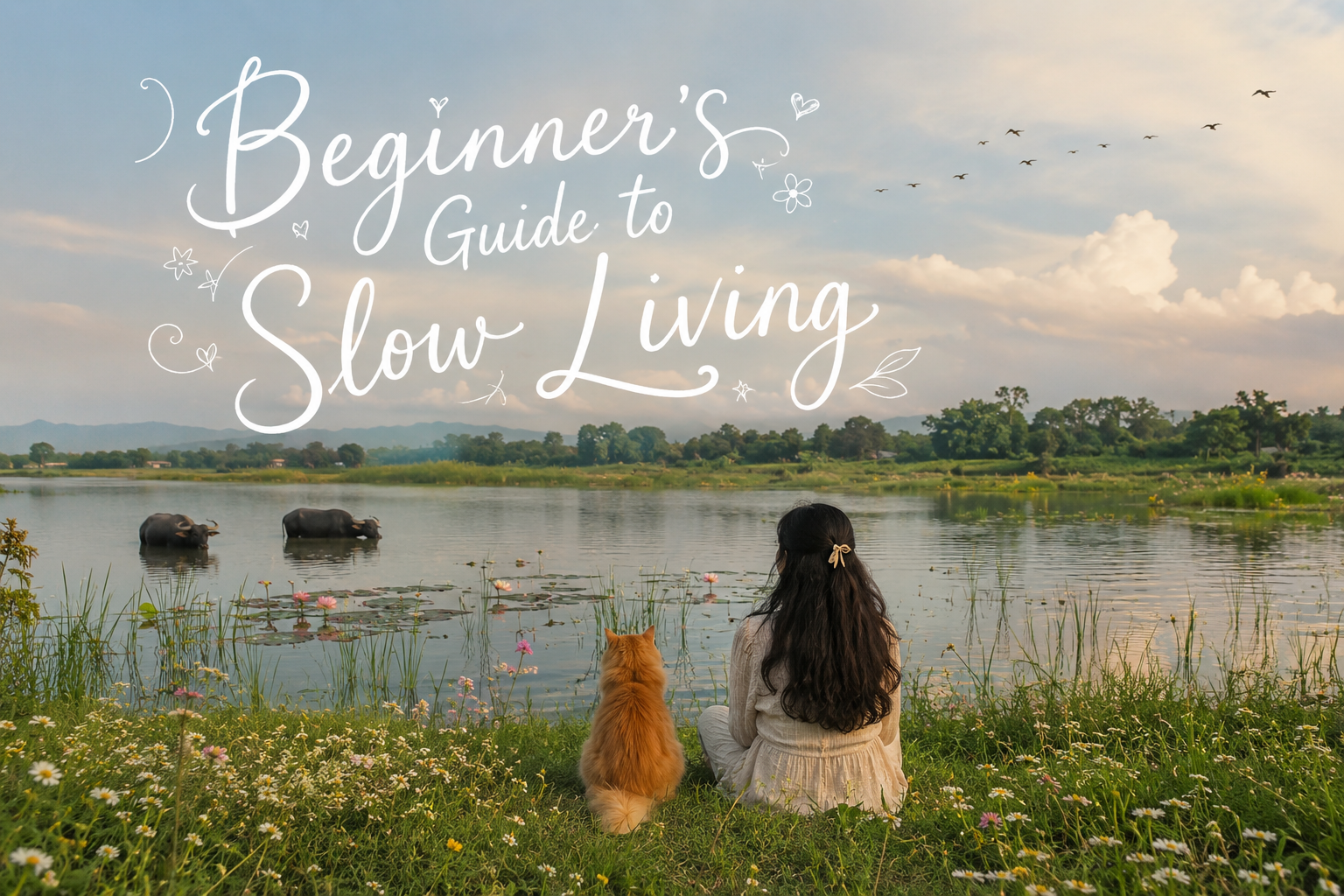
What Is Slow Living?

Slow living is a lifestyle concept that allows you to consciously choose the pact of your life rather than constantly rushing like we missing the train or bus to somewhere important. It doesn’t involve in doing everything slowly. Instead, this approach implies concentrating on meaningful actions like focusing your time, energy, and attention on the things that truly matter while letting go of unnecessary busyness. In a world that prioritizes productivity based on how much we accomplish, slow living asks a different question: “Am I living the life I really want to, or am I just busy?”
What Is Slow Living?
Slow living involves conscious choices in spending your time, money, building your relationships, and investing your energy. Instead of reacting to every notification, deadline, or trend, you create a life that aligns with your personal values.
This movement was born from The Slow Movement, a reaction to the growing amount of fast food and hectic lifestyles. However, over time, this idea has spread to the fields of work, travel, fashion, parenting, education, and everyday life. In other words, slow living is about quality over quantity.
Meanwhile, there are a lot of misconceptions regarding slow living concept. It isn’t:
- Being lazy
- Avoiding being ambition
- Living in the countryside (though you can live in the countryside if you wish)
- Quitting your job
- Moving away from technology
- Spending large amounts of money on aesthetic housing
You can practice slow living while living in a busy city, working full-time, or running a business. It’s about how you live, not where you live.

The Core Principles of Slow Living
- Intentions Behind Every Choice: Each choice is made for a reason. When you buy items for yourself, you will take a moment to think about the following questions, before making a decision: Do I really need this? Will this add value to my life, in some way? Does this coincide with my values?
- Being Present: Slow living means you should be focused on what you are currently doing. A few examples of being ‘present’ are: eating without looking at your phone,having uninterrupted conversations, occasionally taking a walk without wearing headphones, watching a sunset without feeling the need to record it
3. Simplicity: This does not mean you should only have 50 items in your house. This means you need to simplify as much as possible, so you will have more energy to spend on the things that you truly care about Like, having a smaller number of friends that you are close with, a wardrobe that is simpler to pick clothes from, having less stuff around you, having fewer responsibilities etc.
4. Sustainability: Often, slow living is combined with environmental awareness. A few examples of supporting sustainability include: Purchasing less expensive, but higher quality products and repairing instead of replacing and supporting your local businesses, and reducing the amount of food wasted and maybe, using reusable items instead of disposable items when practical
5. Mindful Consumption: Be aware of when you consume. When you are on items such as social media or shopping online, you will stop for a moment and ask yourself the following: “Why am I consuming this?” or “Why am I purchasing this?” or “Is this something that is educational, inspirational, or simply distracting me?”.
6. Rest Without Guilt: You do not need to have accomplished something to rest. It is a basic human need.Resting is a natural need that will allow your body to recharge. RESTING will help improve your creativity, health, and happiness.

Now you might be wondering, what are the benefits of Slow Living:
Many people (including, myself) who adopt slow living report improvements in multiple areas of life.
Mental Well-being
Less stress
Reduced anxiety
Better focus
More emotional balance
Physical Health
Better sleep
Healthier eating habits
More movement
Reduced burnout
Financial Health
Fewer impulse purchases
Better budgeting
Saving for meaningful goals
Spending on experiences rather than excess possessions
Relationships
More quality time
Better communication
Stronger connections
Greater appreciation for loved ones
How to Start Slow Living
You don’t need to change your entire life overnight. Start with one small habit.
Morning: Instead of checking your phone immediately:
Drink water
Stretch
Open the windows
Write three intentions for the day
Meals
Eat one meal every day without screens. Notice:
The taste
The texture
The conversation
Your hunger and fullness
Declutter Slowly: Rather than trying to organize your entire home in one weekend:
One drawer today
One shelf tomorrow
One room this month
Create Device-Free Time For example:
No phone during breakfast
One hour before bed without screens
One screen-free evening each week
Buy Less: Before purchasing something, try the “48-hour rule.”
If you still want it after two days, it may be a thoughtful purchase rather than an impulse.
Slow Living around the World
Many cultures have traditions that reflect aspects of slow living:
Hygge (Denmark): finding comfort and coziness in everyday moments.
Lagom (Sweden): living with balance—not too much, not too little.
Ikigai (Japan): discovering a sense of purpose that gives life meaning.
Friluftsliv (Norway): embracing life outdoors and connecting with nature.
While each has its own history and meaning, they all encourage a more intentional way of living.
Common Challenges
Starting slow living isn’t always easy.You may feel:
Guilty for resting
Pressured to keep up with others
Tempted by constant comparison on social media
Afraid of “falling behind”
Remember that slow living isn’t about escaping responsibilities. It’s about choosing a pace that helps you meet them more sustainably.
Can You Practice Slow Living While Working Full-Time?
Absolutely, you don’t need to quit your job. Small changes can make a big difference:
Plan your week intentionally.
Batch similar tasks together.
Take regular breaks.
Avoid multitasking when possible.
Protect your evenings when you can.
Spend time on hobbies that recharge you.
Slow living is compatible with ambition and it simply encourages pursuing goals in a way that supports your well-being instead of sacrificing it.

Final Thoughts
Slow living isn’t about doing less for the sake of doing less. It’s about making room for what truly matters. Whether that’s meaningful work, nourishing meals, stronger relationships, creative hobbies, or quiet moments of reflection, the goal is the same: to build a life that feels intentional rather than rushed.
As a beginner, you don’t need a perfectly organized home or a dramatic lifestyle change. Start with one mindful choice today, then another tomorrow. Over time, those small decisions can reshape not just your daily routine, but your relationship with time itself.